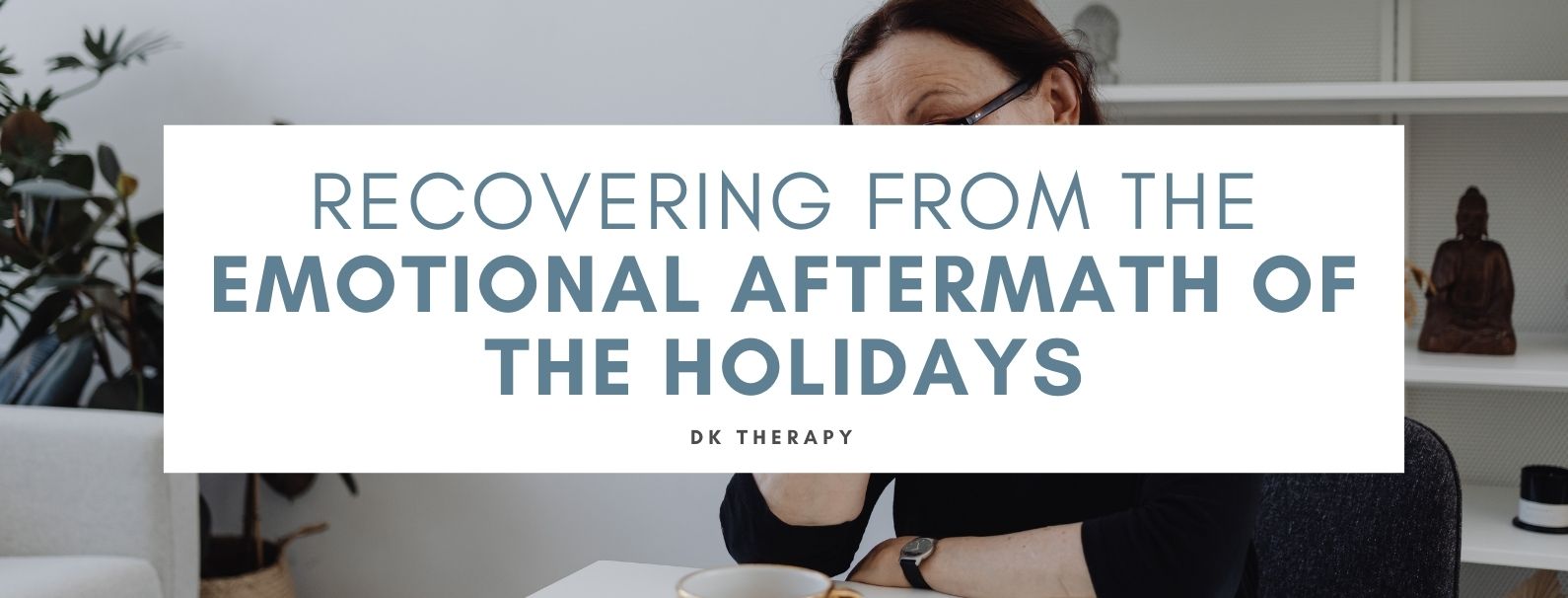
When the holidays end, many people expect their emotional state to return to normalcy just as quickly as their schedules do. Decorations come down and our routines start stabilizing, yet something still feels off. Energy levels may feel low, and motivation can lag when nothing is obviously wrong.
The holidays tend to compress a great deal of emotional effort into a short period of time. Family interactions take a good deal of care and emotional regulation, even when relationships are healthy. There’s also often an expectation to stay present and engaged while managing logistics and other necessities.
Once the external demands ease, the internal effects surface. This is when people notice irritability, sadness, and a sense of emotional dullness that can follow a busy holiday season. The experience can feel confusing because it arrives after the stress appears to be over. In reality, though, emotional processing often takes place following an activity.
Why Emotional Fatigue Shows Up After Things Slow Down
 The emotional aftermath of an event comes about during periods of quiet, not the chaotic times we expect. While the holidays are happening, many people depend on their momentum to keep going. Decisions are made quickly, and the feelings around them are postponed in service of the moment. When that forward motion stops, the mind and body finally have room to unpack the emotional aftermath of it all.
This can include unresolved tension or disappointment that didn’t have space earlier. Even positive experiences can contribute, as it takes effort to be emotionally present. The nervous system doesn’t instantly recalibrate when demands drop. It transitions gradually, which can feel uncomfortable when expectations say otherwise.
People often interpret this phase as a personal failure, because there’s often pressure to feel refreshed in the new year. That pressure can intensify emotional fatigue by adding frustration to already burdensome exhaustion.
Signs You May Be Experiencing an Emotional Hangover
An emotional hangover doesn’t look the same for everyone. Some people notice they’re feeling a little more sensitive or a little less patient than usual. Others feel emotionally flat or disconnected from goals that used to matter. Decision-making may even feel heavier than it typically does, which can make even small tasks take greater effort.
These responses don’t mean something’s wrong with you, but they do highlight the fatigue you may be experiencing after sustained emotional engagement.
Getting Over the Emotional Aftermath Without Forcing It
Feeling better starts with allowing your current state to exist without beating yourself up about it. You don’t need to analyze or assign meaning to every feeling right away. Simply acknowledging that you need rest tends to soften the emotional aftermath of a stressful event.
Creating calmer routines can support this process. Fewer social commitments may feel restorative, and keeping your schedule predictable for a while can help the nervous system stabilize after weeks of variation.
Boundaries are also part of healing. You’re allowed to say no without having to explain yourself. You’re allowed to move at a slower pace if you need to. Be intentional about how you invest your energy, rather than being constantly available.
When Extra Support May Be Helpful
For many people, the emotional aftermath of a stressful holiday eases gradually, with both care and time. If low mood or anxiety persists or interferes with your day-to-day life, support can be helpful. A mental health professional can help explore what the holidays brought up and how to prepare for future high-demand events.
Paying attention to your needs and reaching out for support when necessary can make the transition smoother. If you’re struggling and you’d like to work with a dedicated therapist, please reach out to DK Therapy and schedule an appointment with our office.