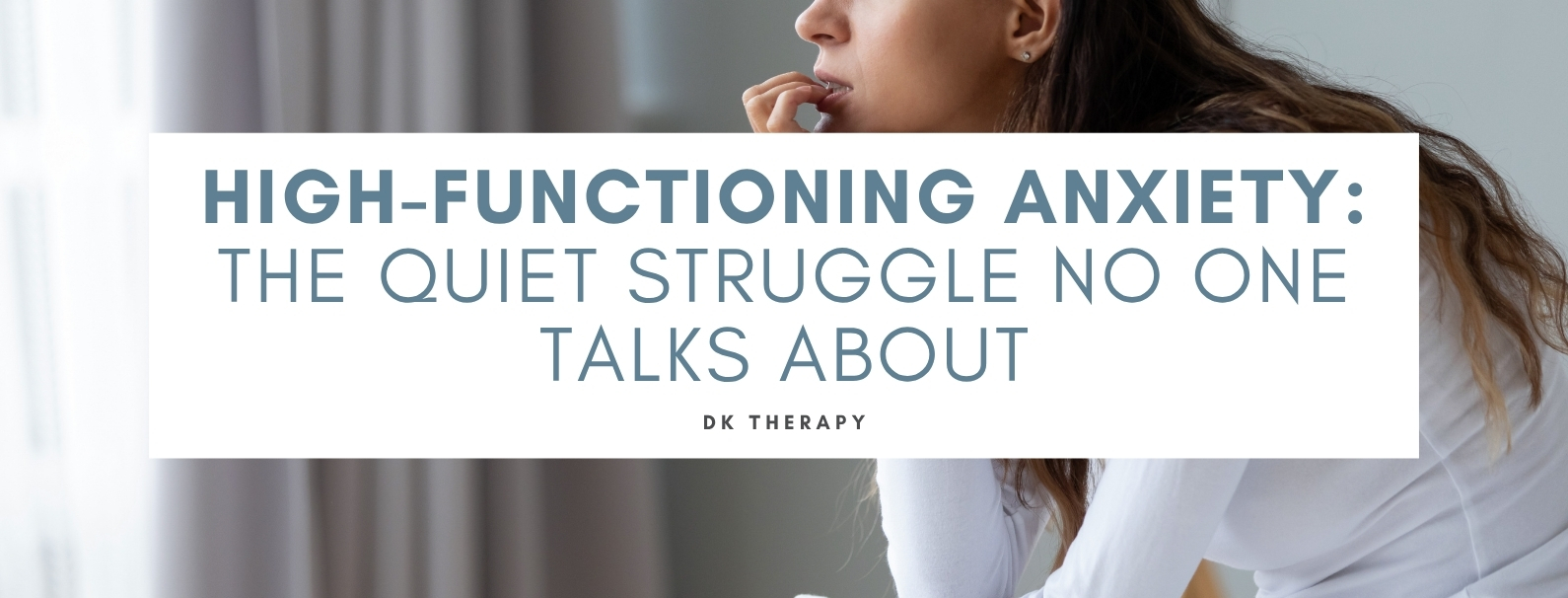
Most of us tend to assume that anxiety makes it nearly impossible to keep up with everyday life. Though that can certainly happen, some people continue to deliver at work and in their work and personal responsibilities, despite struggling with constant worry. The term high-functioning anxiety often describes this experience.
Although it isn’t an official medical diagnosis, it highlights something that many anxiety sufferers can relate to. Someone may appear calm and collected on the outside while feeling overwhelmed by racing thoughts on the inside.
Let’s take a closer look at how high-functioning anxiety presents itself.
What Is High-Functioning Anxiety?
 The term “high-functioning anxiety” is used to describe an anxiety that exists alongside a person’s ability to keep up with daily responsibilities. An individual might, for example, perform well at work, stay organized, meet deadlines, and attend family events while being dragged down by anxiety privately.
Even though it isn’t a formal diagnosis in the DSM-5, the feelings that accompany high-functioning anxiety are incredibly real. In many cases, these experiences are connected to a diagnosed anxiety disorder, like generalized anxiety disorder or social anxiety.
People who deal with this experience tend to push themselves into maintaining certain standards. They might feel compelled to be prepared for every possibility or constantly stay productive because slowing down leaves them alone with their thoughts.
On the outside, others may only notice their reliability or dedication.
Signs and Symptoms of High-Functioning Anxiety
Plenty of people overlook the signs of high-functioning anxiety because they blend into everyday habits. Examples include:
- Constant overthinking or expecting something to go wrong even when there’s no clear reason for concern.
- Perfectionism that creates pressure to avoid mistakes or meet unrealistic expectations.
- Difficulty relaxing because downtime brings about feelings of guilt or restlessness.
- A strong desire to please others that makes it hard to set healthy boundaries.
- Physical symptoms including muscle tension, headaches, digestive discomfort, fatigue, or trouble sleeping.
Why It Often Goes Unnoticed
People with high-functioning anxiety often get good at hiding what they’re going through. They may keep meeting expectations even when they feel mentally exhausted, and because everything appears to be under control, the people around them don’t realize how much effort it takes to keep going.
Social expectations can also make it harder to recognize the problem, as being dependable or hardworking is usually viewed as a positive quality. As a result, anxious thoughts may be mistaken for motivation instead of genuine emotional distress.
Some people also grow so accustomed to feeling anxious that they believe it’s just a part of who they are. They may not even realize that constant worry or pressure isn’t something they have to accept as normal.
When to Seek Support for High-Functioning Anxiety
You don’t have to reach a breaking point before asking for help. If anxiety is affecting your sleep, relationships, physical health, and/or overall well-being, it’s worth talking with a mental health professional.
Treatment depends on each person’s needs. Therapy can help people understand their anxious thought patterns and develop healthier ways to respond to them. Some people with high-functioning anxiety also benefit from stress management techniques or medication when recommended by a healthcare provider.
Seeking support doesn’t mean you’ve failed or that you’re no longer coping well enough. Instead, consider it as taking steps to care for your mental health before your anxiety becomes too much to manage.
You Don’t Have to Struggle By Yourself
Living with high-functioning anxiety while keeping up with daily responsibilities can be lonely because other people may never see what you’re carrying. You deserve support whether your struggles are visible or well-hidden. With the right treatment and practical coping strategies, many people learn to manage anxiety more effectively and feel more at ease in their daily lives.
If you’re living with high-functioning anxiety, you don’t have to deal with it by yourself. Reach out to DK Therapy and book an appointment with our office if you’d like to speak with a dedicated counselor.