
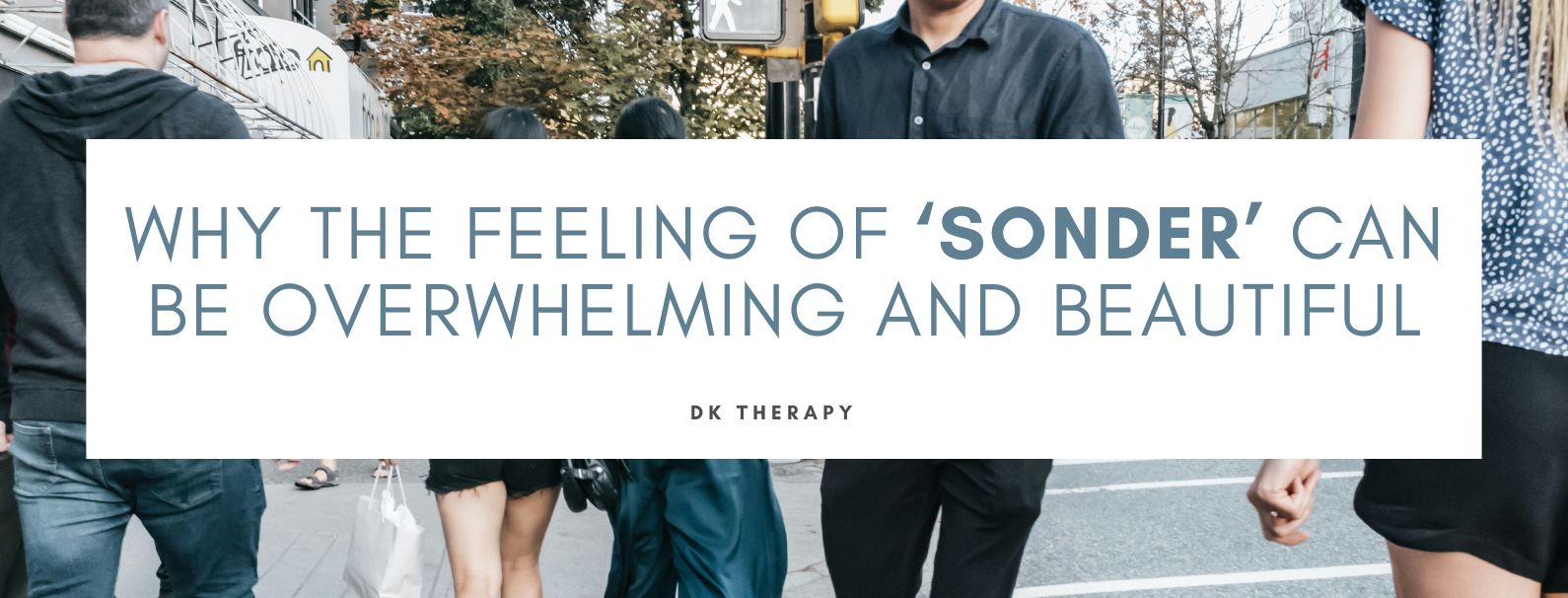
If you’ve ever found yourself lost in thought while watching strangers pass by, you may have experienced what’s known as sonder. Though the term isn’t found in traditional psychology texts, it’s a psychological phenomenon that many people around the world resonate with.
What Is Sonder?
 The word “sonder” defines a previously unnamed emotion, namely the realization that each random passerby is living a life as complex as yours. In other words, it’s the awareness that every single person you see has had experiences, dreams, relationships, habits, and memories. In this way, their lives are not so different from yours.
Though it’s a made-up word, as are all words, the concept behind it aligns with what’s called “theory of mind.” This refers to the ability to attribute mental states to other people. The skill usually develops in early childhood and is helpful for developing empathy, understanding perspectives, and interacting socially.
Why It Feels Overwhelming
Feeling sonder can be quite intense, as it suddenly shatters the illusion that we’re central characters in the stories of our lives. We experience things through our own lenses and narrate stories, track goals, and react to others. But when sonder takes effect, we are reminded that we’re just one of billions of people living intricate narratives.
The sensation of it can be overwhelming, inducing feelings of insignificance or even existential awe. Some compare it to the feeling of staring into the night sky and realizing how vast the universe is.
Additionally, the emotional weight of sonder may stem from our brain’s limited capacity for social cognition. Research states that humans are wired to form close, manageable social groups. The so-called “Dunbar’s Number” suggests that the average person can maintain stable social relationships with around 150 people. When we mentally acknowledge the depth of life in thousands, millions, or billions of others, it naturally overwhelms those mental limits.
Why It’s Also Beautiful
Despite its emotional weight, sonder can also be a beautiful experience. It can encourage compassion, empathy, and a deeper appreciation for the people around us. Even a brief acknowledgment of someone else’s inner world (such as the barista at your morning stop, your public bus driver, or a passerby on the sidewalk) can spark a sense of connectedness.
In some ways, sonder invites us to pay more attention. It encourages mindfulness and helps pull us out of our internal monologue. It reminds us that everyone we encounter is a living, breathing, FEELING human being. They laugh and cry and hurt and experience joy just like we do.
This awareness can soften how we treat others, including strangers.
Art and storytelling also often tap into this sense of interconnected humanity. From novels and films to photography and music, creative works allow us to experience other people’s perspectives, sometimes briefly, but quite deeply. This is part of the beauty of sonder. It draws us closer to empathy through imagination and observation.
Embracing the Feeling
While the feeling of sonder can be overwhelming, getting familiar with it can expand your sense of wonder. Instead of being paralyzed by the realization of how big the world is, you might find the experience comfortable. Let it help you feel for others. Let it help you want better for everyone around you. We are all participants in a shared, dynamic story.
The next time you feel sonder wash over you, don’t push it away. Let it remind you that connection, even if fleeting or silent, is always possible and often just a glance away.
If you’re struggling and you’d like to see what therapy can do for you, reach out to DK Therapy and schedule an appointment with our office.