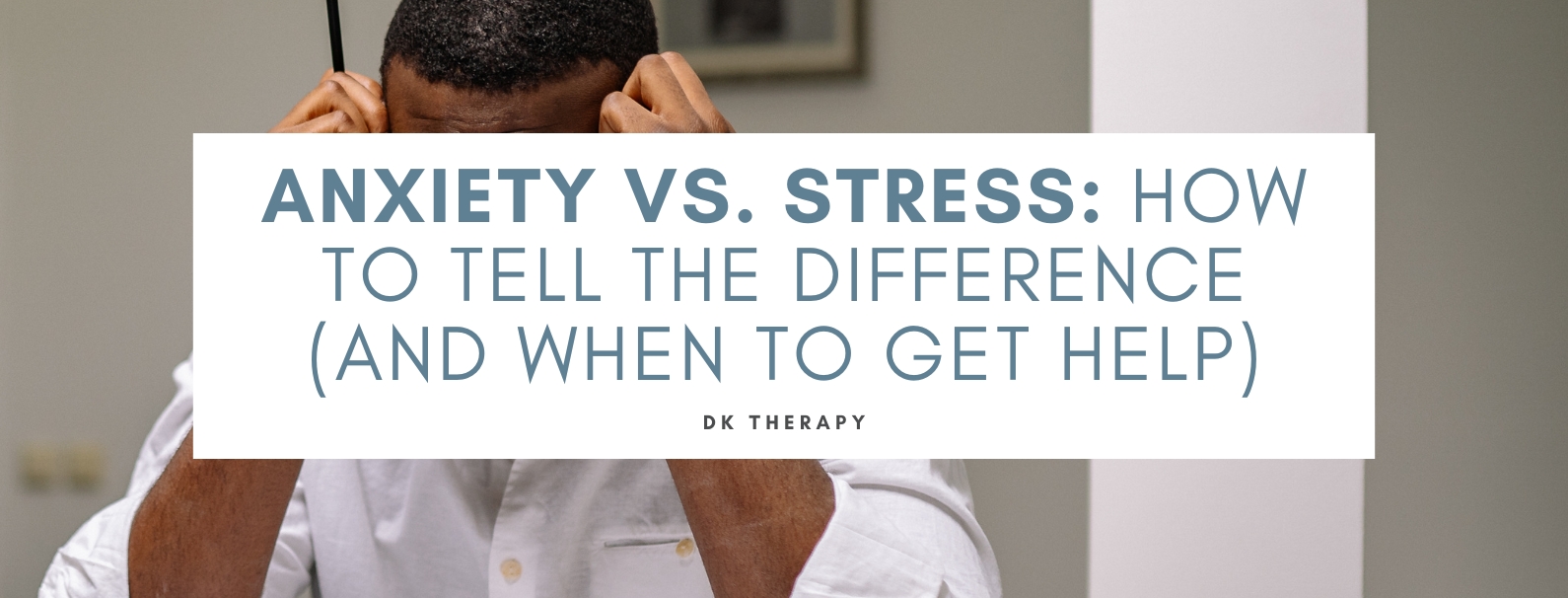
Most people experience both stress and anxiety at some point in their lives, and since they share many of the same symptoms, the terms are often used interchangeably. However, knowing the difference between the two can help you understand what you’re experiencing. That way, you can more easily recognize when it may be time to seek professional help.
What Is Anxiety?
 Anxiety is a mental and emotional state that involves ongoing worry and fear that doesn’t always have a clear cause. While everyone feels anxious from time to time, anxiety may become more frequent or last far longer than expected. Some people worry about specific situations, while others deal with general yet persistent thoughts they can’t quell.
Common signs of anxiety include:
- Excessive worry
- Racing thoughts or trouble concentrating
- Restlessness or feeling on edge
- A fast heartbeat or shortness of breath
- Trouble falling asleep or staying asleep
When anxiety begins affecting your work, relationships, or daily routine, speaking with a mental health professional can help. Many people benefit from treatment and learn practical ways to manage their symptoms.
What Is Stress?
Stress is the body’s natural response to life’s challenges or demands. Work deadlines, financial concerns, family responsibilities, or major life changes can all trigger stress. In many cases, the symptoms improve once the situation at hand has been resolved.
Some of the most common signs of stress include:
- Feeling overwhelmed by daily responsibilities
- Muscle tension or headaches
- Changes in sleep habits
- Feeling irritable or impatient
- Difficulty relaxing after a stressful day
- Temporary changes in appetite
While stress usually improves as the source of pressure goes away, ongoing stress can affect both your physical health and your emotional well-being. If your symptoms continue after the stressful situation has ended, anxiety may also be at play.
Key Differences Between Stress and Anxiety
One of the biggest differences between stress and anxiety comes down to the source of the symptoms. Stress usually develops because of a specific challenge, like a deadline or financial concern. Anxiety, on the other hand, can continue even after a difficult time has passed, and some people experience anxiety that comes with no obvious trigger.
It’s also important to consider the length of time involved. Most of the time, stress eases as circumstances improve, while anxiety can continue for weeks or longer, especially without treatment. Anxiety is also more likely to interfere with everyday life, even during periods when things seem to be going well.
In addition, long periods of stress can increase one’s risk of developing anxiety, which makes it important to pay attention to symptoms that either worsen or don’t improve.
Signs It’s Time to Get Help
Stress and anxiety are both common, but they shouldn’t prevent you from living your life. Reaching out for help is a good idea if your symptoms become difficult to manage.
Consider talking with a mental health professional if you:
- Feel worried or stressed most days for several weeks
- Have trouble working or keeping up with daily responsibilities
- Begin avoiding people or places because of fear or worry
- Experience frequent panic attacks
- Notice ongoing sleep problems that leave you feeling exhausted
You don’t have to wait until symptoms overwhelm you in order to ask for help. A mental health professional can help identify what’s contributing to your symptoms and recommend treatment that fits your needs.
Don’t Battle Stress and Anxiety Alone
Learning the difference between stress and anxiety can make it easier to recognize when something doesn’t feel right. Whether your symptoms have just started or you’ve been dealing with them for far too long, support is available. Taking that first step toward professional care can help you focus on and improve your overall well-being.
If you’re struggling and you’d like to work with a dedicated counselor, please reach out to DK Therapy and book an appointment with our office.