
• Link to Mail
  • Link to Facebook
  • Link to Instagram
  • Link to LinkedIn
  • Link to X
  • Link to Tumblr
  • For Clinicians
    • Employment Opportunities
    • Private Practice Consultation
    • CE Trainings
410 S. Michigan Ave. Suite 928 ~ Chicago 60605 | SCHEDULE ONLINE
DK Therapy
  • Services
    • Individual Counseling
    • Couples Counseling
    • EMDR Counseling
    • Online Counseling
      • Getting Started with Online Video Sessions Guide
    • For Clinicians:
      • DK Therapy CE Trainings
      • Employment Opportunities
      • Consultation
  • Meet The Team
    • Meet The Team
    • Amber DiCosola, LCPC
    • Catherine Watson, LCPC
    • Chris Dubois, LPC
    • Clara Gay, LSW
    • Claudia Hernandez, LCPC
    • Dana Norden, LCSW
    • Danielle Kepler, LCPC
    • Jasmine Goins, LCSW
    • Josh Bate, LPC
    • Joslyn Mowen, LCPC
    • Kelsey Kamin, LSW
    • Rachel Kurt, LCPC
    • Sydney Walden, LCSW
  • Your First Visit
    • Insurance/Fees
    • Good Faith Estimate
    • Your First Visit
    • Q&A
  • Blog
    • In The Media
  • Contact
    • Schedule Online
    • Insurance Verification
  • Menu Menu

What is Dermatillomania? Understanding the Urge to Pick Skin

What is Dermatillomania: Understanding the Urge to Pick Skin

Dermatillomania, also known as skin-picking disorder, is a condition characterized by an uncontrollable urge to pick at one’s skin. Plenty of people occasionally pick at scabs or minor skin imperfections, but individuals with dermatillomania find it hard to stop even if the behavior leads to injury.

Understanding this disorder is important in order to recognize its impact on mental and physical health.

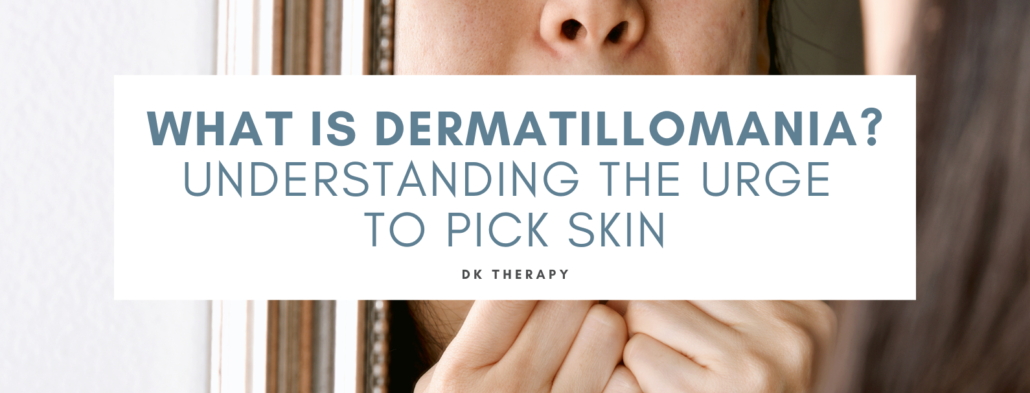
The bare shoulder and lower face of a person with long dark hair.Recognizing the Signs of Dermatillomania

Dermatillomania can manifest in several ways, and the severity of the condition can vary from person to person. Some of the most common behaviors that come with this disorder include:

  • Picking at healthy skin: People with dermatillomania may pick at normal skin in addition to skin that’s already damaged.
  • Targeting specific areas: Some individuals focus on particular parts of the body, such as the face, arms, or legs.
  • Use of tools: Fingers are often used, but some may use tweezers or other sharp objects to intensify the picking.
  • Frequent episodes: The behavior occurs regularly, often several times a day or for extended periods.

People with dermatillomania may feel embarrassed or ashamed of their behavior. As a result, they may attempt to hide the physical consequences, such as covering scars or wearing long sleeves.

The Psychological Roots of Skin-Picking Disorder

Dermatillomania is considered a body-focused repetitive behavior (BFRB), not unlike hair-pulling (trichotillomania) or nail-biting. It is often connected to underlying emotional or psychological issues, such as:

  • Anxiety: Many individuals pick at their skin in response to feelings of anxiety.
  • Perfectionism: Some individuals experience a need to “fix” perceived imperfections on their skin.
  • Obsessive-compulsive tendencies: Dermatillomania shares similarities with obsessive-compulsive disorder (OCD).
  • Emotional regulation difficulties: Skin-picking may serve as a form of self-soothing for individuals who struggle to regulate their emotions.

Understanding these factors can be beneficial when it comes to evaluating the issue and ensuring the individual receives effective treatment. Remember, this condition is often not a matter of willpower but something rooted deeply in one’s emotional or neurological patterns.

Physical and Emotional Consequences

Dermatillomania can cause significant physical harm, including open wounds, scars, and infections. Chronic picking exposes the body to bacteria as well, which increases the risk of needing medical attention to combat the development of illness.

Emotionally, dermatillomania can create feelings of shame, guilt, and isolation. The cycle of picking, followed by regret and attempts to stop, can create a constant battle for control. Many individuals experience anxiety or depression around the condition, which can be made worse by the social stigma and misunderstanding of the disorder.

Treatment Options for Dermatillomania

Effective treatment for dermatillomania involves addressing both the psychological and physical aspects of the condition. Some common approaches include:

  • Cognitive Behavioral Therapy (CBT): CBT helps individuals identify the triggers for their picking behavior, then teaches coping strategies to manage the urges.
  • Medication: In some cases, medications like SSRIs may be prescribed to help reduce obsessive-compulsive tendencies.
  • Mindfulness techniques: Learning how to manage stress and anxiety through relaxation practices can reduce emotional triggers.
  • Barrier methods: For some, covering the skin with gloves or using fidget tools can help interrupt the picking cycle.

Dermatillomania is more than just a bad habit. It’s a mental health condition that requires understanding, compassion, and the Right form of treatment. While the urge to pick at the skin can be overwhelming, it’s important to know that help is available. With the right support, individuals with dermatillomania can learn to manage their behavior, improve their emotional well-being, and heal both physically and mentally.

If you’re struggling and you’d like to discover how therapy can benefit you, reach out to DK Therapy.

SCHEDULE ONLINE NOW

Recent Posts

  • A middle aged or older man with dark brown hair and a light brown jacket drinking out of a white espresso cup outdoors in a city.
    How to Create a Fulfilling Life After Your Children Leave HomeMay 22, 2026 - 10:47 am
  • A woman with brown skin and black hair sitting at a counter with a cup of coffee and a muffin in front of her, with her head in her hand and her eyes closed, looking frustrated.
    How to Handle Caring for a Loved One When Your Efforts Go UnnoticedMay 20, 2026 - 2:40 pm
  • A black and white photo of an Asian woman looking sad and holding her hands up to her mouth like she's thinking.
    Missing Milestones and Mourning the Life You ExpectedMay 7, 2026 - 4:26 pm

verified by Psychology Today

Now offering secure, convenient online counseling/therapy sessions! Learn more

Latest Blog Posts

  • A middle aged or older man with dark brown hair and a light brown jacket drinking out of a white espresso cup outdoors in a city.
    How to Create a Fulfilling Life After Your Children Leave HomeMay 22, 2026 - 10:47 am
  • A woman with brown skin and black hair sitting at a counter with a cup of coffee and a muffin in front of her, with her head in her hand and her eyes closed, looking frustrated.
    How to Handle Caring for a Loved One When Your Efforts Go UnnoticedMay 20, 2026 - 2:40 pm
  • A black and white photo of an Asian woman looking sad and holding her hands up to her mouth like she's thinking.
    Missing Milestones and Mourning the Life You ExpectedMay 7, 2026 - 4:26 pm
  • A Black teenage boy, shrugging his shoulders with his hands in the air like he's confused.
    Alexithymia Symptoms and Why Emotions Can Feel Out of ReachApril 24, 2026 - 5:14 pm
  • A light skinned woman with dark blonde curly hair standing in front of a brick wall, holding her arms up like she's frustrated.
    How to Cope When You’re Overlooked for a Promotion at WorkApril 22, 2026 - 3:54 pm

410 S. Michigan Ave. Suite 928

Cancellation Policy

Please note that we require a 24-hour notice if you decide to cancel your appointment. Call or email to cancel or reschedule at least 24 hours before your scheduled appointment in order to avoid charges. We will do our best to accommodate you and appreciate your cooperation. Thank you.

© Copyright 2026- DK Therapy, LLC
  • Services
  • Meet The Team
  • Your First Visit
  • Blog
  • Contact
Link to: Depression vs. Dysthymia: Understanding the Differences and Treatment Approaches Link to: Depression vs. Dysthymia: Understanding the Differences and Treatment Approaches Depression vs. Dysthymia: Understanding the Differences and Treatment Appro...A black and white photo of a white woman laying on her side.Link to: Leaning into Winter: How to Reprioritize During the Colder Months Link to: Leaning into Winter: How to Reprioritize During the Colder Months A woman bundled up in winter gear outdoors in the snow, throwing snow over her head happily.Leaning into Winter: How to Reprioritize During the Colder Months
Scroll to top Scroll to top Scroll to top